Skip to content
Retail9 min read

AI-Powered Inventory Intelligence for Omnichannel Retailers

By Aiwah Labs·
AI-Powered Inventory Intelligence for Omnichannel Retailers

Managing inventory across multiple retail channels is expensive and error-prone when done manually. Stockouts cost sales. Overstocking ties up cash. And when your systems don't talk to each other, you're always reacting instead of planning. AI inventory intelligence changes this by giving retailers accurate, real-time visibility across every channel and automating the decisions that currently depend on human judgment and spreadsheets.

Real-Time Visibility and Demand Forecasting for Omni-Channel

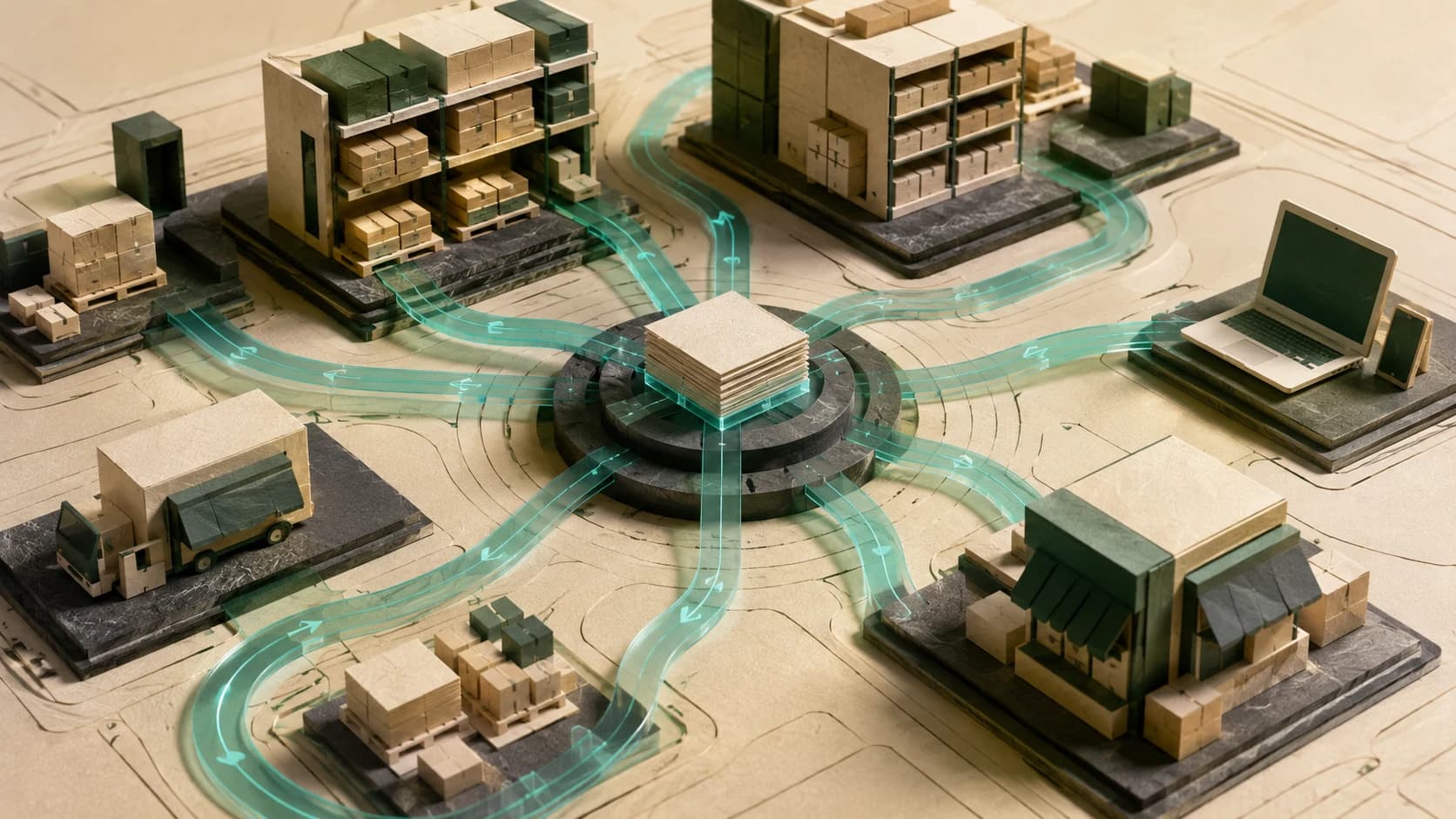
The cornerstone of effective omnichannel retail is a unified view of inventory across all touchpoints, from physical stores to e-commerce warehouses and third-party logistics. Traditional inventory systems often struggle to consolidate this information in real-time, leading to discrepancies, missed sales opportunities, and customer frustration. AI inventory intelligence for retailers fundamentally changes this by integrating data from every channel into a single, intelligent platform.

Real-time inventory visibility lets retailers know exactly what stock they have, where it is, and whether it's available for pickup, ship-from-store, or direct delivery. This prevents overselling and underselling and makes planning decisions faster and more accurate.

AI demand forecasting goes further than looking at historical sales. It can incorporate seasonal trends, promotional impacts, weather, competitor activity, and local events to predict demand at a granular level. The result: the right products in the right place at the right time, with less manual analysis and fewer stockouts.

For retailers managing thousands of SKUs across multiple locations, doing this manually isn't possible. AI handles the analysis and generates purchasing recommendations automatically. This cuts overstocking costs and keeps shelves stocked during peak demand. These gains are particularly significant in fast-moving consumer goods and fashion, where demand shifts quickly.

See our case studies showcases how businesses have successfully implemented similar AI-driven solutions to achieve tangible results. These implementations often involve sophisticated machine learning models that continuously learn and adapt to changing market conditions, making their predictions more accurate over time.

AI-Powered Inventory Intelligence for Retailers
Photo by Viktor Bystrov on Unsplash

Optimizing Stock Levels and Preventing Stockouts

One of the most persistent and costly challenges in retail inventory management is striking the delicate balance between having enough stock to meet demand and not having too much. Both overstocking and stockouts lead to significant financial losses and damage brand reputation. AI inventory intelligence offers powerful solutions to optimize stock levels and virtually eliminate stockouts.

AI-driven systems use advanced analytics to determine optimal reorder points and quantities for each product across every location. This goes far beyond simple min/max thresholds. The AI considers lead times from suppliers, production schedules, sales velocity, carrying costs, potential obsolescence, and even the probability of future demand spikes or dips. By continuously monitoring these variables, the system can automatically generate purchase orders or transfer requests, ensuring that shelves are always stocked without unnecessary surplus.

Preventing stockouts matters more in e-commerce than anywhere else. When a customer searches for a product online and finds it out of stock, they are highly likely to move to a competitor. This not only results in a lost sale but also a potentially lost customer. AI-powered e-commerce inventory management actively monitors stock levels against forecasted demand, providing early warnings for potential stockouts. It can even suggest alternative fulfillment options, such as sourcing from another store, if a primary location is running low. This proactive approach safeguards revenue and maintains customer loyalty.

Furthermore, AI can identify slow-moving or obsolete inventory before it becomes a major problem. By flagging products with declining sales velocity or approaching expiration dates, retailers can take corrective action, such as running promotions or bundling items, to clear stock and minimize write-offs. This intelligent classification and management of stock directly contributes to healthier cash flow and improved gross margins. The efficiency gains extend to warehouse operations, where optimized stock placement, guided by AI, can reduce picking times and improve overall logistical flow. Retailers looking to automate other operational aspects might also be interested in how AI can enhance overall business efficiency, as discussed in Unlocking AI Automation for Low-Tech Businesses: The n8n Advantage Revealed. Integrating these various automation layers builds a formidable, resilient operational backbone.

Enhancing Customer Experience and Operational Efficiency

AI inventory intelligence isn't only about moving products. It's about creating better shopping experiences and cutting the operational work that currently happens manually. For the customer, instant product availability and reliable fulfillment are paramount. When inventory systems are powered by AI, customers benefit from accurate online stock information, consistent product availability across channels, and faster, more reliable delivery or pickup options. This reduces instances of disappointment and builds trust.

Consider the "buy online, pick up in-store" (BOPIS) model, a popular omnichannel offering. AI ensures that when a customer places a BOPIS order, the item is genuinely available at their chosen store and ready for collection, preventing frustrating trips. Similarly, for ship-from-store operations, AI optimizes which store fulfills an online order based on proximity, stock levels, and shipping costs, enhancing delivery speed and reducing operational strain. This granular control over fulfillment logic is a key differentiator of AI-driven solutions.

From an operational standpoint, AI-powered inventory intelligence significantly boosts efficiency. Automated inventory counts, driven by computer vision or RFID technology integrated with AI, reduce the need for manual checks, freeing up staff for more value-added tasks. AI can also optimize warehouse layouts and picking paths, minimizing travel time and errors for warehouse personnel. By predicting component shortages or supply chain disruptions, AI enables proactive adjustments to production schedules or supplier orders, preventing costly delays.

The data generated by AI inventory systems provides invaluable insights for strategic planning, extending beyond everyday operations. For instance, detailed inventory analytics can inform merchandising strategies, identify cross-selling opportunities, and even guide product development based on unmet demand patterns. For further exploration of how AI can transform various aspects of retail, including customer interaction, consider AI for Ecommerce. These solutions collectively create a sophisticated ecosystem that drives both customer satisfaction and bottom-line growth.

How Aiwah Labs Automates This

Aiwah Labs builds AI inventory systems that connect to your existing ERP and POS systems, no rip-and-replace. We use machine learning models trained on your historical sales, supply chain data, marketing campaigns, and external signals to power:

  1. Generate highly accurate demand forecasts: Our AI analyzes hundreds of variables to predict customer demand at a granular SKU and location level, far surpassing traditional forecasting methods.
  2. Optimize dynamic safety stock levels: We don't just calculate safety stock; our AI continuously adjusts it based on demand variability, lead time reliability, and service level targets, minimizing both holding costs and stockout risks.
  3. Automate reorder points and purchase suggestions: Based on real-time inventory, sales velocity, and supplier lead times, our system automatically generates optimal reorder recommendations, helping procurement teams make data-driven decisions.
  4. Facilitate intelligent stock transfers and allocations: For omnichannel retailers, our AI can identify surplus in one location and deficit in another, recommending optimal inter-store transfers to balance inventory and maximize sales across your network.
  5. Real-time inventory visibility across all channels: One dashboard aggregating data from physical stores, warehouses, and e-commerce platforms, a single accurate view of your stock at any moment.

Every implementation is built around your specific constraints and goals. We focus on measurable results: lower carrying costs, fewer stockouts, and a supply chain that runs on data rather than guesswork.

FAQ

What is AI inventory intelligence for retailers?
AI inventory intelligence for retailers refers to the application of artificial intelligence and machine learning technologies to optimize every aspect of inventory management. This includes advanced demand forecasting, real-time stock monitoring, automated reordering, and strategic allocation across multiple sales channels. Its primary goal is to improve efficiency and enhance customer satisfaction by ensuring optimal product availability.
How does AI prevent stockouts and overstocking simultaneously?
AI achieves this by analyzing vast amounts of data, including sales history, market trends, promotional activities, and supplier lead times, to generate highly accurate demand forecasts and dynamically adjust optimal stock levels. This precision allows retailers to order exactly what is needed, when it is needed, thereby minimizing surplus stock that ties up capital and reducing the risk of stockouts that lead to lost sales. The system continuously learns and adapts to new data, improving its predictions over time.
Is AI inventory intelligence primarily for large enterprises, or can smaller retailers benefit?
While large enterprises often have the resources for extensive AI implementations, AI inventory intelligence is increasingly accessible and beneficial for smaller retailers as well. Cloud-based solutions and modular AI platforms give businesses of all sizes access to these capabilities without heavy implementation friction. The ROI from prevented stockouts, better replenishment timing, and improved efficiency can be highly impactful for smaller businesses operating with tight margins.

Have questions about this topic for your business? Ask us.

Aiwah Labs
Infinity Bot
Online
powered by
Aiwah Labsinfinity