Current-platform assessment
Map users, business capabilities, dependencies and recurring failure points. Distinguish essential behaviour from accidental complexity before designing a replacement.

Platform rebuild
Build the platform your next stage of growth needs.
Discuss your workflowThe operation, connected
Aiwah rebuilds operational and product platforms when their architecture is making useful change too difficult. We work across the data model, business logic, interfaces and integrations, with a delivery sequence that accounts for the live business. The result should make the next change easier to understand, test and release.
An ageing platform can accumulate duplicate records, tightly coupled modules and customer-specific workarounds. New features touch too many systems and an ambitious replacement plan grows before users see a benefit. We define clear boundaries and a practical first release before expanding the rebuild.
What we can build
Scope the combination that solves your operating problem, with clear responsibilities for software and people.
Map users, business capabilities, dependencies and recurring failure points. Distinguish essential behaviour from accidental complexity before designing a replacement.
Define module boundaries, data ownership and integration contracts. Choose an architecture the team can operate and change rather than adding components without a delivery reason.
Design the tasks people actually perform, including bulk work, review and exceptions. Test the experience with users before a large implementation is committed.
Reconcile identities and define the records that connect the business. Plan historical data migration, permission mapping and reporting continuity.
Where feasible, move a bounded capability alongside the existing platform. Define how old and new exchange state, which system owns each record and when a dependency can be retired.
Deliver testing, observability, deployment automation and recovery procedures with the platform. Make ongoing operating costs and ownership clear.
Clear modules and contracts make the next release easier to understand.
An example workflow
This is a starting point for design. The actual workflow, permissions and integrations are scoped around your operation.
Agree the business reason for rebuilding and identify a bounded area with useful impact. Map its interfaces and current behaviour.
Implement the shared records, permissions and contracts required for that capability, with tests around its critical rules.
Exercise real workflows, reconcile data and rehearse the release. Roll out to an agreed group before widening adoption.
Use feedback, stability and delivery performance to prioritize the next capability and retire obsolete dependencies deliberately.
Works with your existing tools
We design coexistence with existing applications, identity providers, payment systems, reporting tools and external partners. Compatibility, data ownership and integration versioning are part of the rebuild scope.
Measures we can define together
We establish a baseline and agree a measurement method. Results depend on your process, data and adoption; these are measures to track, not promised outcomes.
Related work and thinking
Explore existing case studies and essays connected to this service.

Case study · flyEurope DMC
flyEurope DMC shows how one shared operating model can connect staff, partner agencies and travellers.
Read the case study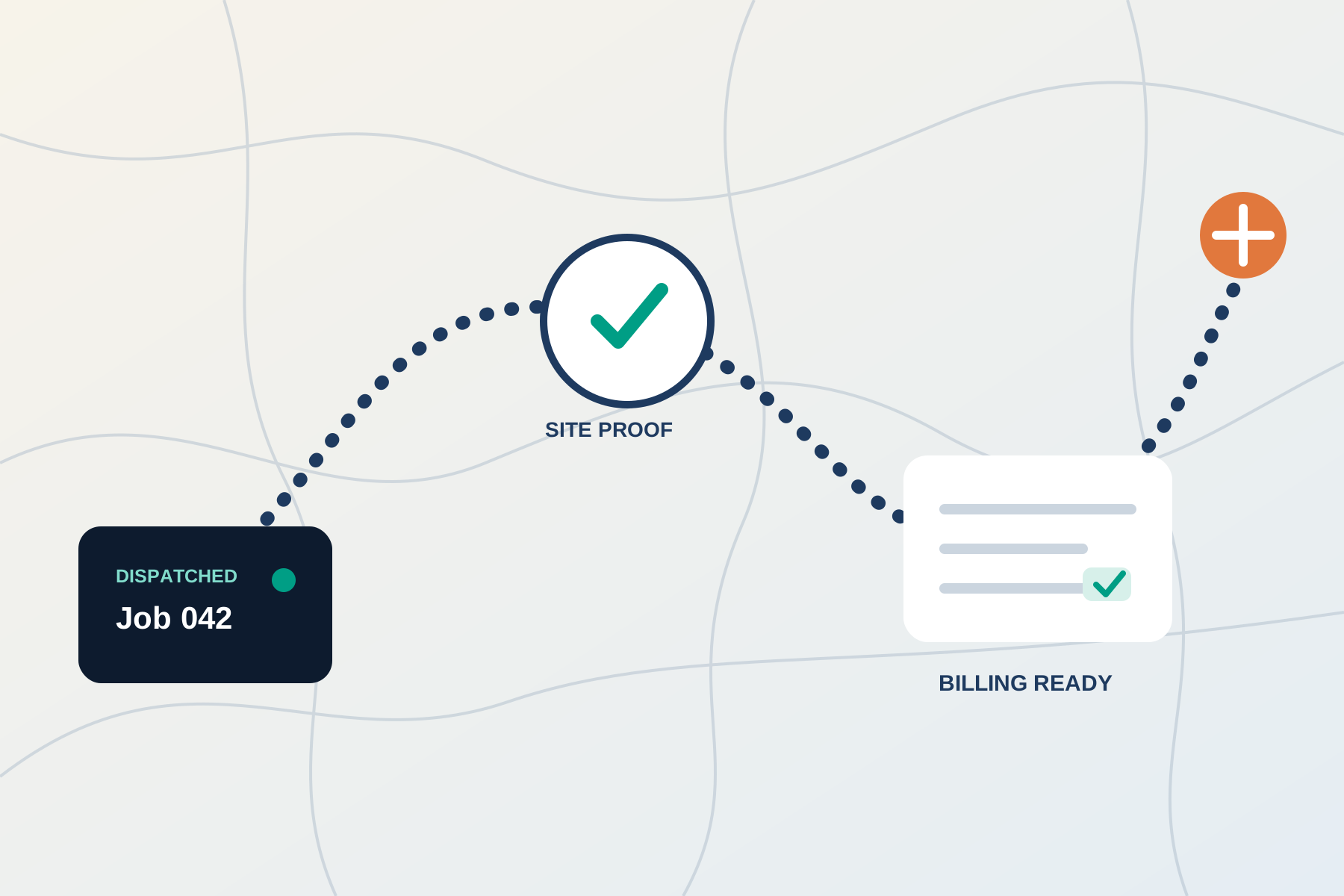
Case study · Field-service company
Shows a mobile-first service workflow that carries job evidence, customer updates and billing readiness in one record.
Read the case study
Essay · 4 min read
The interface is where an organisation operates. Code is where its durable rules evolve.
Read the essayFrom discovery to live operation
We begin with a working session around a real example. We map the workflow, identify the costly handoffs and agree the decisions, permissions and integrations the system needs.
We then shape a focused first release, build the operating interfaces and test routine work alongside exceptions and failure recovery. Rollout includes the people using the system and a way to observe whether the change is helping.
You keep practical control of the code, workflows, business logic, data and operating context we create, subject to third-party services and licences. Support and continued improvement are scoped with the engagement.
Read about security and controls →Before we begin
The release plan should account for ongoing work. Parallel delivery is often possible, but the answer depends on shared data, module boundaries and team capacity. We agree the coexistence plan during discovery.
We assess the source quality and required history, then map, transform and reconcile it. The migration plan includes samples, exception handling and an acceptance process with the data owners.
Ownership of the code, workflows, business logic and data we create is defined in the engagement. Third-party services keep their own licensing terms. Documentation and support responsibilities are part of delivery.
Explore connected services
Bring one important workflow
Tell us where the operation slows down, what your team is doing manually and what a better result would look like.
Book a meeting