Field service | Dispatch-to-billing operations
MetricsA field-service company connected dispatch, mobile proof, customer updates, and billing readiness
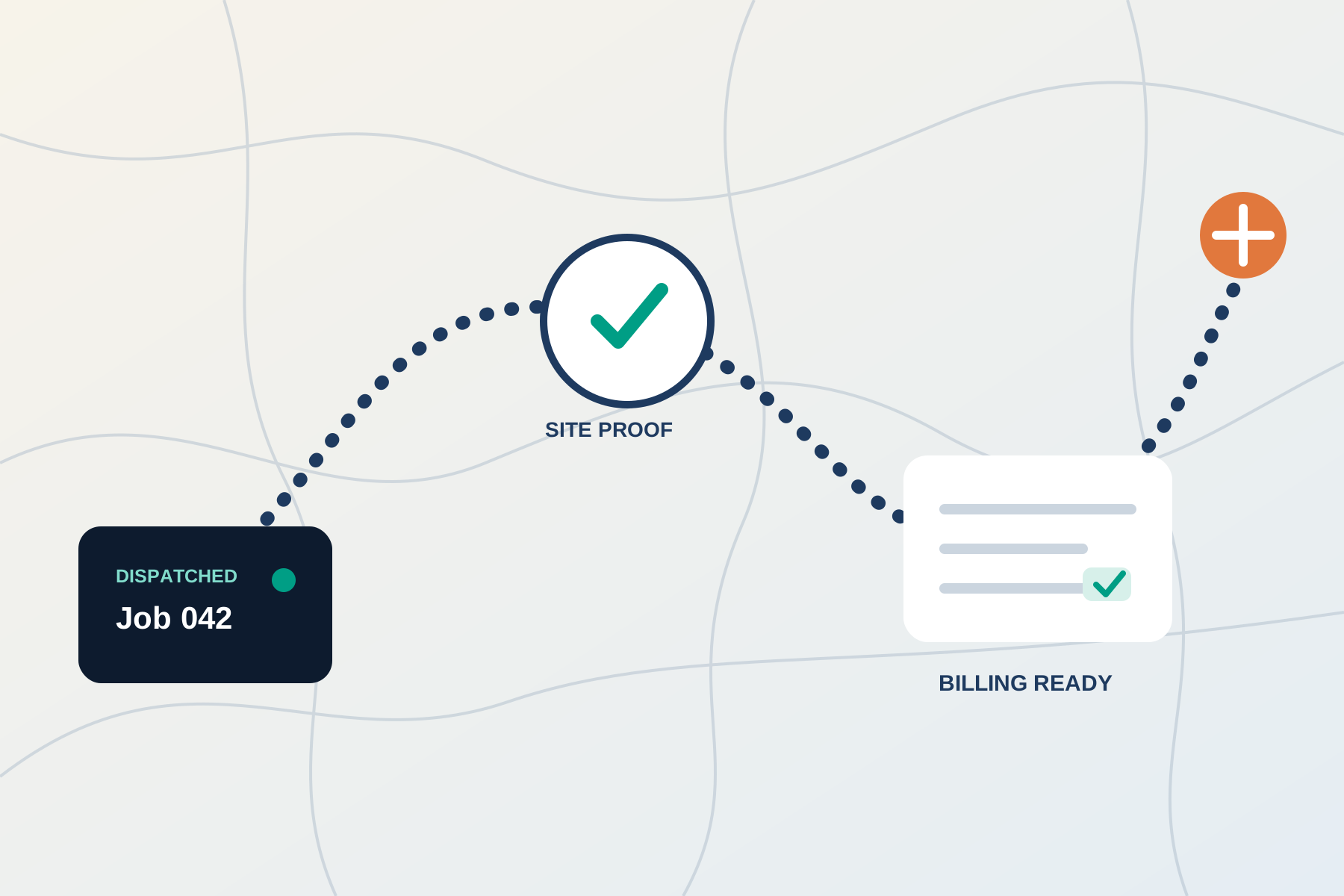
Commercial field teams use one workflow from service request through scheduling, technician context, job evidence, customer communication, approval, and invoice-ready completion.
Every job carries the evidence needed to finish it
The job record can include asset history, site access details, safety requirements, work scope, parts, photos, signatures, customer commitments, and the commercial rules that determine billing readiness.
Dispatch works from live constraints
Scheduling considers geography, skill, certification, parts, access windows, priority, and active job status instead of relying on a board detached from field evidence.
Completion flows cleanly into customer and finance work
Verified field evidence can trigger the appropriate customer update, approval queue, follow-up work, and invoice preparation without a second round of re-entry.
A field job changes shape from the office to the customer site
Commercial field-service teams receive a request in one channel, schedule from another, carry job notes in messages, document work with photos and paper forms, and hand billing a partial completion record at the end. The dispatcher sees a schedule, the technician sees a work order, and finance sees an invoice request—but the actual job history is scattered between them.
That fragmentation creates avoidable calls, repeat visits, disputed invoices, and poor customer communication. The most expensive failure is often a completed job that cannot be closed or billed because the supporting evidence did not return with it.
The job becomes one mobile-first operating record
A private field-service workflow can organize the service request, asset and site context, work scope, safety checks, SLA, technician assignment, route, parts, customer contacts, photos, signatures, test results, and completion notes around the same job. The technician sees the relevant context before arrival and captures evidence at the point of work.
Dispatch can see whether a job is en route, blocked, awaiting customer access, waiting for a part, ready for review, or complete. Customers receive updates from the verified job state rather than a separate manual status process.
AI helps prepare and check work, with people in charge of the job
An AI assistant can summarize job history, prepare a technician brief, identify a missing photograph or required form, turn voice notes into a structured completion record, and flag a possible mismatch between work performed and billable scope. It can reduce administrative burden without pretending to inspect equipment or authorize commercial changes on its own.
Technicians, supervisors, and account managers remain responsible for safety, technical diagnosis, scope changes, customer commitments, and invoice approval. The system records those decisions so the next visit begins with an accurate history.
Operational improvement shows up in fewer broken handoffs
The most valuable metrics include response and arrival reliability, first-time completion, jobs awaiting evidence, return-visit reasons, approval ageing, invoice readiness, and the time between completed work and an accurate customer update. Each one points back to a job record that a team can inspect and improve.
A real field-service implementation would be designed around the operator’s service catalogue, certifications, safety rules, mobile connectivity, pricing model, asset systems, dispatch practice, customer SLAs, and billing controls.